play_arrow

keyboard_arrow_right

Listeners:

Top listeners:

skip_previous play_arrow skip_next
00:00 00:00
chevron_left
chevron_left
  • cover play_arrow

    Cree Nation Radio 103.5 FM Cree Nation Radio 103.5 FM
menu play_arrow
volume_up

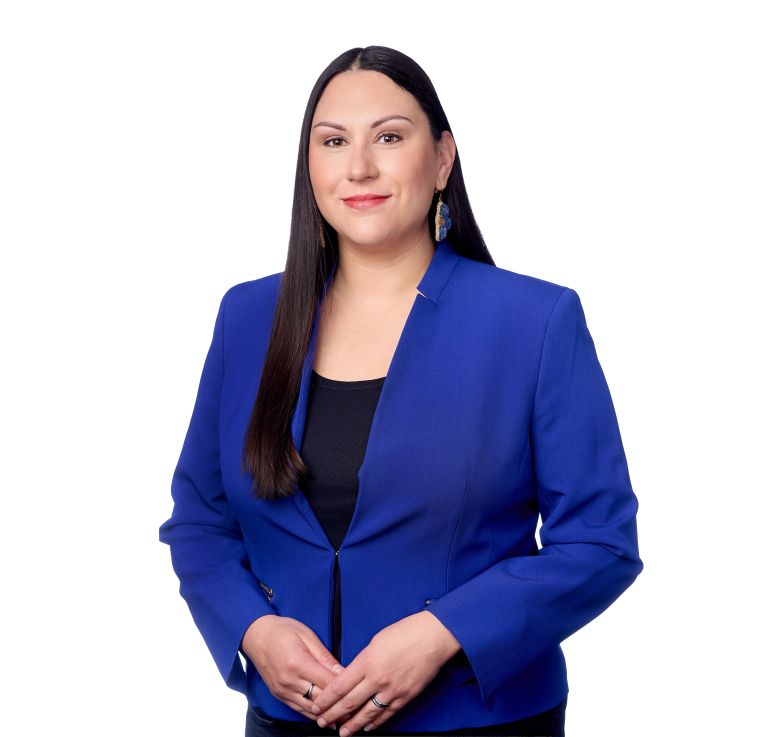
Jillian Taylor

Background

Role Model Series: Jillian Taylor

Jillian Taylor, a proud member of Fisher River Cree Nation, serves as the Executive Producer of News at CBC Manitoba. With nearly 20 years of experience in journalism, she has focused extensively on Indigenous issues, including coverage of missing and murdered Indigenous women and girls. Jillian’s dedication and leadership have been instrumental in shaping impactful news stories throughout her career.

1) What is your professional designation and/or occupation and where did you attend college and/or post-secondary?

I am the Executive Producer of News at CBC Manitoba. I have a bachelor degree in Arts from the University of Winnipeg, majoring in Rhetoric, Writing and Communications. I have been a working journalist for almost 20 years, first interning at APTN and then becoming a TV reporter there. I also worked CTV News Winnipeg before moving over to CBC Manitoba in 2012. I worked as a field reporter covering Indigenous issues, specifically missing and murdered Indigenous women and girls, before moving behind the scenes as an assignment producer. I have been an executive producer for three years.

Who were your role models and mentors growing up and what did they teach you?

I had many role models while growing up ranging from teachers, to coaches to my parents. 

The most important role models were my older female cousins, who are also members of Fisher River. In our big family, it was them who first pursued post secondary education. My cousin Carla Taylor showed me how to be a good athlete, strong student, and a good person. I still look up to her to this day, as she is now a healer working as both an Athletic Therapist and an Osteopath. 

What were your biggest challenges on this life journey and how did you overcome?

The biggest challenge was believing in myself, believing I am smart enough and believing I have earned every opportunity. Imposter syndrome is real.

Where did your career take you in the world?

As a journalist, I have reported in communities from Southern Manitoba to Lac Brochet. Specializing in covering Indigenous issues was the highlight of my field reporter days, as I got to visit many First Nations and tell our relatives stories. 

As I moved into producing I was able to follow a residential school survivor from Nova Scotia to Massachusetts, looking for the evidence she needed to prove she was also part of the 60s scoop after being kidnapped by a nun. 

The furthest I have travelled for work is to Sydney Australia. I got a journalism fellowship to work with other Indigenous people in my field. I chose Australia because their public broadcaster, ABC, is similar to CBC and has a dedicated Indigenous team. We were in the beginning stages of CBC Indigenous and I wanted to learn from them. I was also able to spend time with a newsroom of Aboriginal journalists at NITV, a dedicated Aboriginal news source at a different broadcaster called SBS. 

What could you share with youth about striving and achieving their career dreams?

You are the only one in control of your story. You have the strength, power, and knowledge to create the future you want. Believe in yourself, don’t be afraid to ask for help, and it is okay to make mistakes!

Fisher River Cree Nation is a community in which our history, language, traditions, and culture are paramount to who we are as a people. We will protect and maintain the spirit and intent of the treaties and our inherent rights. Fisher River will be a self-sustaining progressive community with a strong and accountable government. We will provide an environment where all people are healthy, safe, and respected.

CONTACT US

0%